
In this guide
I’m Dr. Namgu Kim. A narrow-looking smile starts a conversation; it does not tell us which structure should change. The useful distinction is between tooth position, upper-jaw width and a shift as the teeth come together. An expansion recommendation needs to explain that distinction before it names an appliance.
Three findings that can look similar in a photograph
Upper-jaw width, the bite, supporting bone and periodontal health also belong in this assessment.
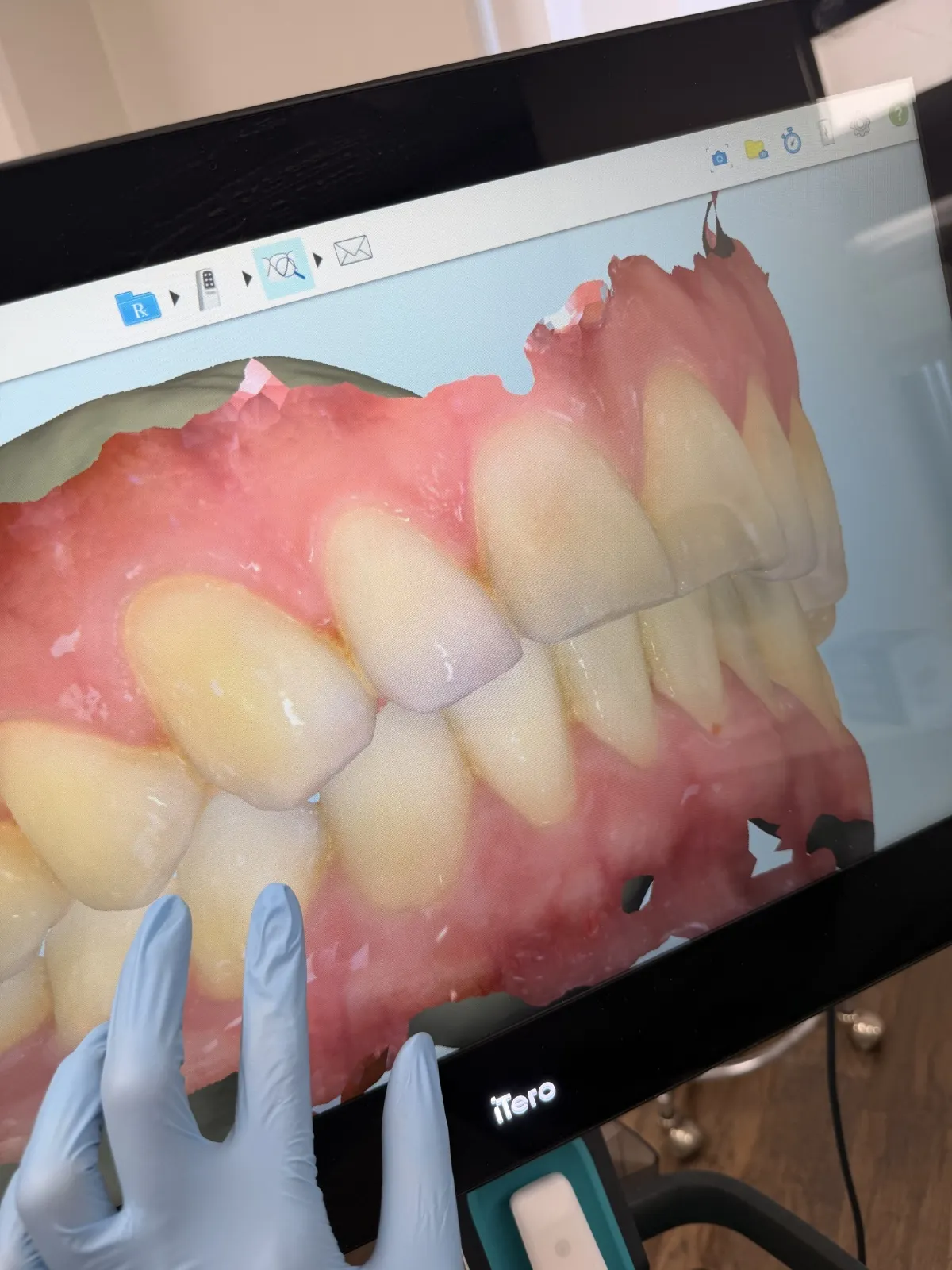
A posterior crossbite describes an abnormal side-to-side relationship of the back teeth. Tooth position, jaw width and a movement of the lower jaw during closing can contribute different parts of the problem. Those findings need to be separated in the examination. [1]
Tooth tilt can disguise a width mismatch. A tilted lower molar is a clue rather than a diagnosis, and a photograph does not establish skeletal width. The supporting cross-sectional study found relationships involving upper-molar inclination, but did not find significant lower-jaw correlations. It cannot establish a safe expansion amount from the lower teeth alone. [2]
| Finding | What needs to be distinguished |
|---|---|
| Dental position | Whether tooth inclination contributes to the way the back teeth meet. [2] |
| Skeletal width | Whether the upper-jaw width itself is part of the mismatch. [1] |
| Functional shift | Whether the lower jaw changes position between first tooth contact and the final bite. [1] |
Why the decision differs for a growing child
For a growing child with a posterior crossbite and functional shift, timely correction may improve bite function. Eruption, space, jaw relationships, growth and cooperation also affect timing. [1]
The timing deserves as much explanation as the appliance choice. What finding supports acting now? What would be watched if treatment were deferred? The same word, “crossbite,” does not by itself explain whether the aim is tooth movement, a width change, correction of a shift or a combination.
What MARPE means for an adult
MARPE means miniscrew-assisted rapid palatal expansion. Small screws in the palate support the appliance and help transfer forces to the upper jaw. Skeletal widening and tooth movement can both occur, so I keep those outcomes separate in explaining what a plan is intended to accomplish. [4]
In an adult plan, the width problem has to be considered alongside supporting bone, periodontal health and the intended result. Imaging needs a planning purpose; this page does not prescribe CBCT for everyone. If nonsurgical expansion is unsuitable or insufficient, surgically assisted expansion or another jaw-surgery approach may need consideration, with its own benefit–risk assessment. [6]
A hypothetical planning distinction, not a diagnosis or patient case: a concern about the appearance of the upper front teeth and a diagnosed upper-jaw width mismatch are different starting points. The shared description “narrow smile” cannot substitute for showing which finding the proposed appliance is meant to change.
What the research can—and cannot—promise
A 2021 systematic review found skeletal and dental widening after MARPE, but concluded that GRADE quality of evidence was very low.
Most included studies had serious risk of bias. Those averages cannot give you a personal success guarantee. [4]
A 2023 review also rated the evidence very low and reported some skeletal and dental relapse; follow-up was often short. [5] An initial opening, a corrected bite and stability years later answer different questions. I keep those questions separate here because a new gap between the front teeth is not the whole result.
Expansion is a sequence, not just a number of turns
Expansion involves fitting the selected appliance, following its prescribed activation plan, reviewing the response and stabilizing the change. Braces or aligners may then be needed for alignment and bite coordination. Use the instructions prescribed for your appliance; an online turning schedule cannot replace them. [3]
The written sequence should show what expansion is meant to change, how that change will be checked and what remains afterward. Distinguishing the expansion stage from later tooth alignment also helps you see which stages the fee includes. That makes a change of direction easier to understand if the response differs from the plan.
Discuss risks before choosing an appliance
MARPE is not risk-free. A retrospective study documented inflammation, pain, appliance problems and uneven expansion. It identifies complications to discuss; it does not predict an individual patient’s risk. Persistent discomfort or an appliance or screw that seems loose or damaged should be reported so the treating team can advise on the next step. [9]
A separate review describes dental tipping, changes to bone around the teeth, gum-related complications and failure to achieve the intended skeletal opening. Existing gum and bone conditions matter to planning. [6] Before starting, the alternatives belong in the discussion: what might justify a pause, a modification or a different approach? That question is part of choosing treatment, not only something to raise after a difficulty.
Snoring and sleep apnea need their own evaluation
I do not equate frequent snoring or observed breathing pauses with a palate-width diagnosis; those symptoms need appropriate medical assessment. The AAPD supports screening and referral for possible obstructive sleep apnea and coordinated care when an oral appliance is considered. An expansion recommendation should not be presented as a sleep-apnea cure. [7]
The American Thoracic Society conditionally supports considering orthodontic treatment for selected children with persistent sleep apnea after adenotonsillectomy and relevant craniofacial findings, including maxillary constriction. The evidence certainty is very low. [8] That is a defined group of children, not a recommendation to expand every child who snores or proof of a general adult sleep-apnea benefit.
Bring the decision you want made clearer
If a width recommendation is unclear, bring the written plan and mark the decision you want explained. Three questions are particularly useful:
- Finding: Which records support a dental, skeletal or combined width problem? Is there a functional shift?
- Choice and limits: Why does this appliance fit the goal, what alternatives should be considered, and what would still need other treatment?
- Review and stability: What would justify continuing, pausing or changing the approach, and how will the result be held over time?
Questions patients ask
Can an adult have palatal expansion without surgery?
Some adults may be candidates for MARPE. Published studies describe nonsurgical skeletal widening, but success is not guaranteed. The individual width diagnosis and reasonable alternatives need explanation before “without surgery” becomes the deciding feature. [4]
Does a gap between the front teeth prove that expansion succeeded?
No. The response needs comparison with the original goals and records, beyond the gap alone. Skeletal widening, tooth movement and later stability are separate outcomes. [5]
Will expansion replace braces or aligners?
Not necessarily. Expansion addresses a width problem; further treatment may be needed to align the teeth and finish the bite. That is why the proposed sequence should show what expansion does and what the next stage is meant to accomplish. [3]
Should we choose expansion because my child snores?
Snoring warrants discussion of medical evaluation. That evaluation and the orthodontic reasons for expansion need to be distinguished and coordinated when appropriate. Expansion should not replace the diagnosis or treatment of a sleep disorder. [7]