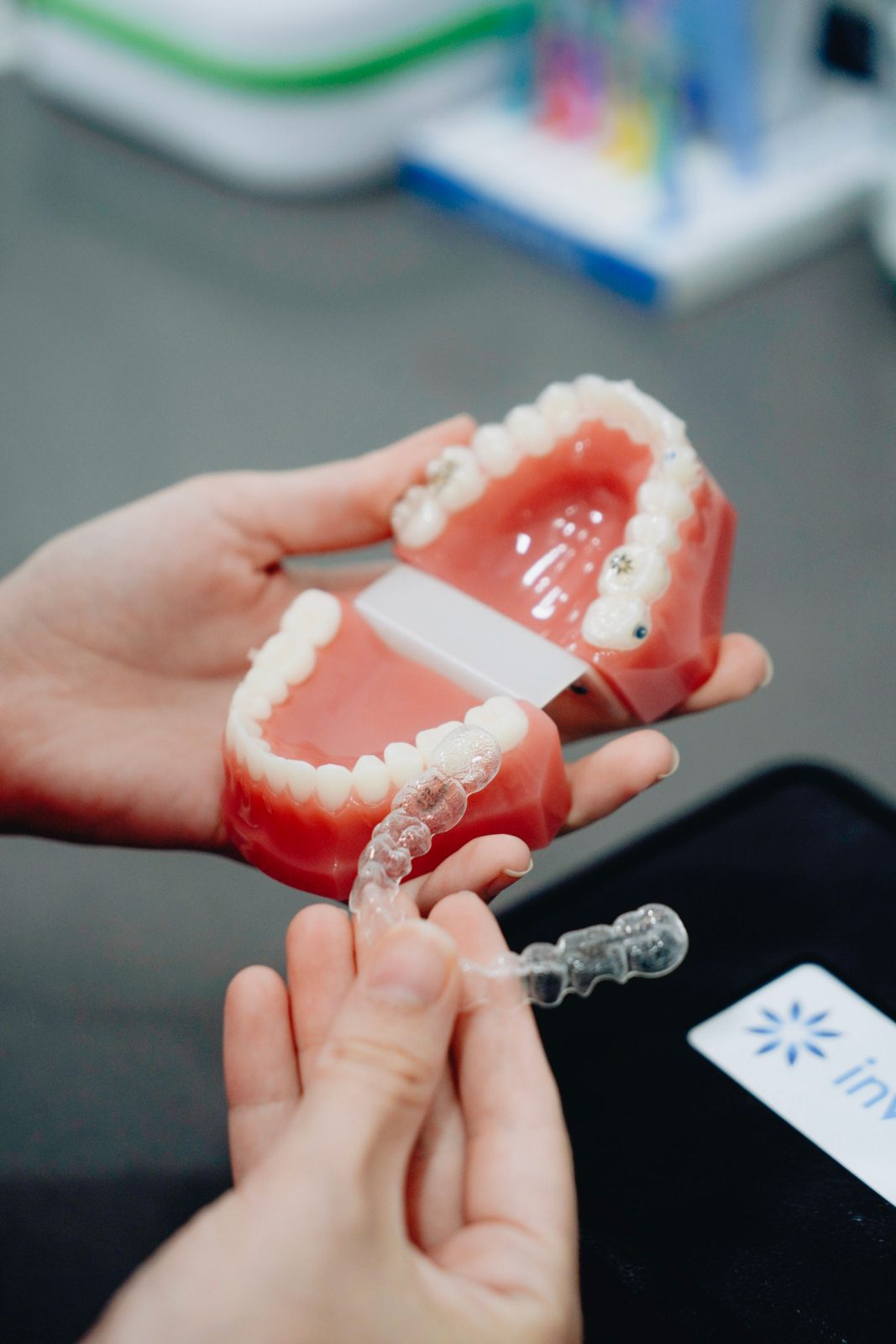
I start with the diagnosis, not the appliance. The first thing I want to know is whether the upper jaw is truly too narrow for the lower jaw, or whether the problem is the teeth. If it's a real skeletal width problem in an older teen or adult, MARPE gives me a less invasive and potentially much more cost-effective way to widen the upper jawbone without starting with surgical expansion. Extraction still makes sense when the teeth are simply too crowded or the mouth is too full and forward.
The question I ask first: is the upper jaw really too small?
When I evaluate someone for expansion, I'm not just looking at crowded teeth or whether the smile looks narrow. I specifically compare the skeletal width of the upper jaw with the skeletal width of the lower jaw. One way I explain it is that the upper jaw is the roof the lower jaw has to fit underneath. If that roof is too narrow, the lower jaw may have to slide left or right just to find a bite that fits. In some patients, that may contribute to muscle or jaw-joint symptoms. Crowding by itself doesn't answer the question. You can make an arch look wider just by tipping the teeth outward, without correcting the skeletal problem underneath.
How MARPE works
MARPE stands for miniscrew-assisted rapid palatal expansion. The small screws connect the expander more directly to the palatal bone. Instead of asking the teeth to carry all of the expansion force, I'm trying to get more skeletal expansion and less unwanted tipping of the teeth. In a young child, a traditional expander can open the midpalatal suture, the seam down the middle of the palate, so much more of the expansion occurs in the bone. Age 11 is the cut line. When a patient is 11, MARPE can definitely help better than a traditional expander (an RPE). In a skeletally mature adult, a traditional expander is much less predictable for opening the suture, and that's when I may use a bone-anchored expander. When I'm concerned the suture may not split predictably, MARPE can be surgically assisted to release that resistance and improve the chance of a successful skeletal expansion. The best approach depends on the patient's age, anatomy, bone quality and CBCT findings. This has really changed what I can offer older teenagers and adults. About half the people I treat are adults.
Where SARPE and jaw surgery still fit
Traditionally, once a patient had stopped growing and had a significant width problem, surgical expansion such as SARPE was often considered. Sometimes it was a segmental Le Fort I as part of jaw surgery. Those procedures can be very effective, but they also involve surgery, anesthesia and recovery. So MARPE doesn't mean everybody avoids surgery. Even when someone will still need jaw surgery later, correcting the width first may simplify the surgical plan. The surgeon may have less width to correct, less overall movement to make, or better coordinated jaws to work with.
Width also isn't always the only problem. In growing patients, I can combine expansion with a facemask or other protraction mechanics to bring the upper jaw forward. Sometimes that improves both problems before surgery is ever considered.
When I still take teeth out
Extraction is still the right call when the teeth are just too crowded. It also depends on the tissue biotype, meaning whether the tissue around the teeth can tolerate the expansion it would take to unravel the crowding. And when the mouth is too full and forward, extraction can bring the profile back to better balance. Because we can often create space by developing the arch with the lighter-force Damon system, I find I need to extract teeth far less often than with traditional systems.
Common related questions
Will MARPE help my breathing?
It can. MARPE can widen the nasal airway, including the back of it, which can improve airflow. But the breathing benefit depends on what's actually causing the restriction, and a sleep study is needed to diagnose sleep apnea.
Will MARPE leave a gap between my front teeth?
A front gap can show up, but it doesn't tell me how much the back of the palate widened, and the back is where we need the expansion for airflow. When we pair MARPE with aligners, we can also minimize the gap.
Does everyone with a narrow palate need MARPE?
No. Not everybody with crowding or a narrow smile needs MARPE. The appliance itself is only a tool. Sometimes that's MARPE. Sometimes another approach. Sometimes surgery is still needed.
Related answers

This page is general education and was clinically reviewed. It is not a diagnosis. Treatment should be based on an in-person evaluation.
Get a straight answer about your own situation
A consultation is information, not a commitment. No pressure to start anything that day.
Call (626) 388-2621